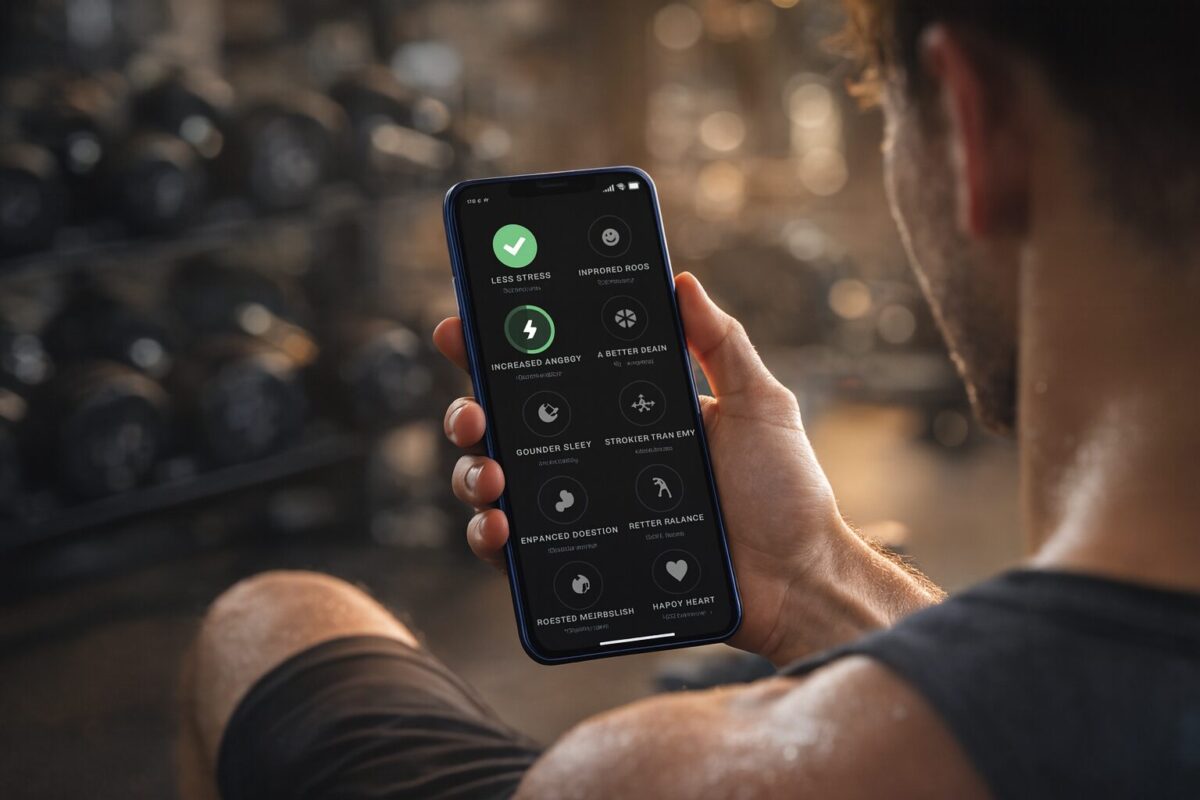
How Muscle Booster Really Works (Before You Subscribe)
I’ve been seeing the Muscle Booster app everywhere for a while. Ads, recommendations, “get in shape fast” screenshots… all of it. Eventually I gave in and thought: ok, let’s actually see if this thing does anything in real life.
Short version?
Yes, it can work. When I actually followed the workouts properly, I felt fitter, looked better, and it made it easier to just show up and train.
But there were also things that annoyed me enough that I wouldn’t feel right telling someone “just subscribe, it’s amazing” without a very clear warning label.
So I’ll walk you through:
- What was genuinely good for me
- What drove me nuts
- A few “watch this closely” points before you give them your card
- And whether I still think it was worth the money in the end
Want to try Muscle Booster for yourself?
If you decide to test the app after reading this review, use the official store links below. Install it, run it hard for a few weeks, and see if the short, guided workouts actually fit your routine.
- Structured workouts you can follow at home or in the gym
- Short sessions that fit busy days
- Simple “open the app and press start” experience
This is not medical advice. Always train within your limits and talk to a professional if you have injuries or health issues. Some links on this page may be affiliate links, which means we may earn a commission if you install or subscribe through them.
First Impressions: The Good Stuff
When I first set it up, I liked how little brain power it required. You answer a few questions:
- What’s your goal?
- Home or gym?
- What equipment do you have?
- How many days per week?
That’s it. No spreadsheets, no “design your perfect program.” The app just spits out a plan and says, basically:
“Here. Do this today.”
On days when I’d normally overthink everything (“Should I do upper/lower? Push/pull? Legs? Maybe tomorrow…”), that was huge. I’d open the app, hit start, and move. No scrolling YouTube for twenty minutes trying to choose a video.
The workouts themselves surprised me a bit. A lot of them are short blocks—7, 10, 15 minutes. Time-based, simple movements, clear demos. You can stack sessions if you want a longer day, or just do one block when life is chaotic and you barely have half an hour.
For me, that mix of:
- short but focused sessions, and
- zero decision-making
was honestly the best part. It’s much easier to be consistent when you don’t have to think.
Coming Back After “Not Really Training”
This app is clearly designed with the “I haven’t really worked out in ages” crowd in mind. And in that sense, it’s actually pretty friendly.
It doesn’t throw you into hardcore Olympic lifting. There are:
- Bodyweight routines
- Options that work with just dumbbells or bands
- Lower-impact moves
- Clear little animations and muscle diagrams
If you’re older, or carrying some extra weight, or just anxious about walking into a gym and trying to remember what a Romanian deadlift even is, this feels a lot less intimidating than some hardcore barbell app.
I also liked that it didn’t lock me into a single setup. Some days I’m at home with just a mat and a pair of dumbbells. Other days I can get to a normal gym. The app let me keep the habit going either way, which is a big deal for travel weeks or messy schedules.
Does It Actually Do Anything?
For me: yes, when I used it correctly.
When I clicked into the app 4–5 days a week, didn’t skip the tougher days, and actually pushed myself, I noticed:
- Better conditioning
- More muscle definition
- Just feeling more “awake” in my body
It’s not magic, obviously. But if you’re starting from low activity, a structured nudge like this really does move the needle.
So if I only told you the “good parts”, I’d say:
“If you want someone to just tell you what to do and you’re willing to follow it, Muscle Booster can absolutely help.”
But that’s not the full story.
Where It Starts to Feel Messy
Once the honeymoon phase wears off, a couple of things start to get annoying.
The Subscription Side
Let’s get this out of the way: the app is not cheap, especially if you end up on one of the longer subscription options.
You usually get some kind of intro deal—lower price for the first period—then it rolls into the regular, higher rate automatically. That’s normal for a lot of apps, but with something like this you really feel it if you’re not paying attention.
My takeaway after poking around the subscription side:
- You absolutely need to know when your renewal is.
- You absolutely need to know where you subscribed (Play Store / App Store vs direct).
- And you absolutely should set a reminder before that renewal hits.
If you go in thinking “I’ll just try this for a bit” and don’t track it, it’s very easy to forget and then be annoyed when you see the charge later. I didn’t get blindsided because I’m paranoid with subscriptions, but I can see how someone who doesn’t watch it closely would feel burned.
When the App Misbehaves
The other thing that really got under my skin: stability.
There were days when I’d start a routine, get halfway in, and the app would:
- Freeze
- Crash
- Or throw a “something went wrong” message
In some cases, reopening the app meant I’d lost the workout or had to manually dig around to reconstruct what I’d been doing. When you’ve dragged yourself into training mode and that happens mid-session, it’s honestly brutal for motivation.
And it’s not just full crashes. I’ve seen:
- Timers glitch
- Animations stop early
- Audio cues behave weirdly
If this were a free app, I’d shrug. On a paid subscription, every time it happens you feel like you’re paying for something that doesn’t fully hold up its side of the deal.
Workouts That Feel “Off”
Most of the time, the workouts are fine. Sometimes they’re actually pretty good. But every now and then I’d look at a session and think:
“Who programmed this?”
Things that stood out to me:
- Certain muscle groups getting hammered several sessions in a row.
- Other areas barely showing up, even when I’d expect them.
- Combinations of exercises that would be unrealistic in a busy gym (you’d need multiple machines at once).
- The app not always reacting in a logical way when you mark sessions as too easy or too hard.
It doesn’t always feel like a human sat there and said: “Is this sensible? Would I actually run this with a client?”
It feels more like the app is stitching blocks together based on rules. Sometimes that lands okay. Sometimes it feels like the logic is a little off.
I ended up manually adjusting or swapping movements a few times to keep my joints happy and the workout realistic. That’s fine for me, because I know what I’m doing, but if you’re brand new you’re probably just going to follow whatever’s on the screen.
Under the Hood: How “Smart” Is It Really?
The marketing leans hard on “personalized” and “smart” and “AI-powered.” I get why—they’re not going to call it “a decent template system with some rules.”
From the inside, it feels more like this:
- It knows your goal, your equipment, and how many days you say you can train.
- It has a big library of workouts and exercise blocks.
- It has rules to decide what to give you and how to progress it.
That’s useful. It’s definitely more tailored than a random YouTube playlist. But it isn’t what I’d call “coach-level intelligence.”
You don’t get:
- Clear, multi-month periodization that’s obviously laid out and explained.
- Proper long-term planning with deloads and specific strength targets.
- Deep analysis of your progress that you’d get from a human coach looking at your logs line by line.
You do get:
- Enough structure to keep you moving and progressing from “untrained” to “decently fit.”
- Enough variety that it doesn’t instantly feel repetitive.
- Some adaptation when you give it feedback.
If you expect “AI coach that thinks like a top strength coach,” you’ll be disappointed.
If you expect “smarter than random, dumber than a human coach,” that’s about right.
Tracking, Data, and All the Nerdy Stuff
This is where the app really isn’t built for the data-obsessed.
If you like:
- Charts
- Detailed strength history
- Volume tracking per lift
- Clean integration with your watch, sleep, heart rate, etc.
Muscle Booster is pretty basic.
Logging is… fine. It’s good enough to say “I did a workout, here’s roughly what I did.” It’s not a great long-term training log if you care about seeing your squat trend over six months or looking at volume per movement pattern.
Health and wearable integrations feel more like an afterthought than a core feature. You can’t treat it as your central training data hub the way you might with something more serious.
This didn’t completely ruin it for me—because I wasn’t trying to run a powerlifting prep cycle through it—but it’s something to be aware of. If you really care about your numbers, you’ll probably end up tracking key lifts somewhere else.
So… Was It Worth the Money for Me?
This is the part everyone wants in one sentence, but it’s a bit more nuanced than that.
Compared to doing nothing
If your current situation is:
- You don’t train
- You keep saying you’ll start
- You get overwhelmed trying to choose a plan
then yeah, paying for a few months of Muscle Booster can absolutely be a good investment.
For me, the value wasn’t in fancy AI. It was:
- Removing decision fatigue
- Giving me a plan I could just follow
- Nudging me into being consistent again
If that’s the difference between “still not training” and “actually in a routine,” the subscription cost starts to look more like health money than app money.
Compared to everything else you could do
If you’re already fairly motivated, or you like tinkering with programs, there are other routes:
- Other apps with cheaper plans and stronger tracking
- Free beginner templates from reputable coaches
- YouTube series that are actually structured
- Your own program plus a simple log, maybe with ChatGPT / Gemini helping you tweak things
It really comes down to your personality:
- If you like to understand the “why” and build things yourself, Muscle Booster will feel too locked down and a bit rough around the edges.
- If you just want someone to tell you exactly what to do and you don’t want to spend a single extra brain cell on programming, it fits better.
Where I personally landed
For me, the app:
- Helped me train more consistently
- Gave me enough structure to see progress
- Annoyed me sometimes with bugs and a subscription model I had to watch carefully
Would I keep it forever? No.
Would I use it for a focused block—say 8–12 weeks—to kickstart things or get back in the groove? Yes, that actually makes sense to me.
So my honest answer:
If you go in eyes open about the pricing, set a reminder for renewals, and treat Muscle Booster as a tool for a specific season rather than a permanent lifestyle tax, it can be a good investment—especially if it’s the thing that finally gets you training regularly.
If you want deep data, total control over your program, or a stable app with zero quirks, this probably won’t be “the one.”
If you want something that lives on your phone, shouts “do this today,” and you’re okay paying for that push, then it’s worth at least one serious trial run.
Want to try Muscle Booster for yourself?
If you decide to test the app after reading this review, use the official store links below. Install it, run it hard for a few weeks, and see if the short, guided workouts actually fit your routine.
- Structured workouts you can follow at home or in the gym
- Short sessions that fit busy days
- Simple “open the app and press start” experience
This is not medical advice. Always train within your limits and talk to a professional if you have injuries or health issues. Some links on this page may be affiliate links, which means we may earn a commission if you install or subscribe through them.