Vertical Drama Meaning: What It Is, Why It’s Vertical, and How These Short Shows Work
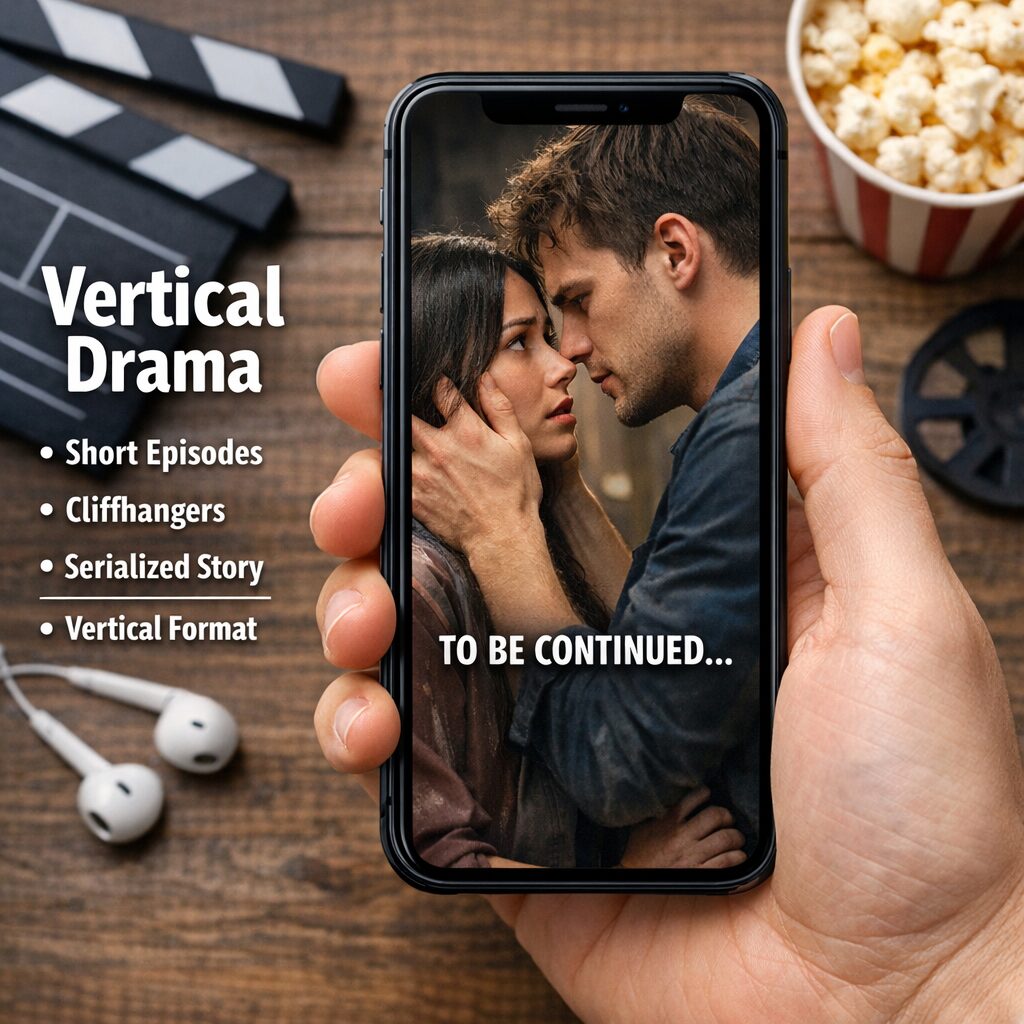
“Vertical drama” is one of those phrases that sounds technical… until you realize it just means: a short TV series made for your phone screen.
So instead of wide-screen (landscape) TV, it’s filmed in vertical (portrait). And instead of 30–60 minute episodes, it’s broken into tiny episodes that are meant to be binge-watched in quick bursts.
If you’ve ever watched a clip and thought, “Wait—where do I watch the full thing in order?” you’re in the right place.
Quick links
(You don’t need to click these now. Save them for the “where to watch” part later.)
The simplest definition
A vertical drama is:
- a serialized story (same characters, continuing plot)
- filmed in vertical format (full-screen on your phone)
- split into very short episodes
- designed to end on cliffhangers so you keep going
People also call these shows:
- micro dramas
- mini dramas
- vertical series
- short drama episodes
- sometimes even “short TV series” (especially in search)
Different words, same basic format.
Vertical drama vs micro drama vs mini drama (they overlap a lot)
This is where people get confused, so here’s a clean comparison.
| Term you searched | What it usually means | What you should expect |
|---|---|---|
| Vertical drama | The video is made for portrait (phone) viewing | Full-screen phone format, fast pacing |
| Micro drama | Very short episodes, serialized like a soap opera | Tiny episodes, constant cliffhangers |
| Mini drama | Sometimes used as a synonym for micro drama | Short episodes, lots of parts |
| Vertical series | Same idea as vertical drama | A “series” experience, just vertical |
| Short drama / short TV series | A broad search term people use for the whole category | Could be any of the above |
The main takeaway: don’t get stuck on labels. Most apps and viewers use these terms interchangeably.
Why are these shows vertical in the first place?
Because it’s built for how people actually watch on a phone:
- You don’t rotate your screen.
- It fills the whole display.
- The framing is optimized for faces, reactions, and emotional moments.
- It fits “watch 2 minutes while waiting for something” behavior.
It’s basically the storytelling version of: “I’m on my phone anyway, give me something that works here.”
How long is a vertical drama episode?
There isn’t one universal rule, but the category is widely described as very short.
A common description is about 1–3 minutes per episode on average, and many platforms market episodes as “around a minute” to highlight the quick-hit pacing.
That’s also why the seasons feel different than TV. A “season” might be:
- 50 episodes
- 80 episodes
- 100 episodes
It sounds huge, but it’s not huge in watch-time. It’s just broken into lots of small parts.
The “hook loop” (why it feels addictive)
Vertical dramas are built like a loop:
- Start the scene immediately (no long intro)
- Show a problem or reveal
- Escalate tension
- End on a cliffhanger
- Repeat
It’s not “slow TV.” It’s “keep tapping.”
What kinds of stories show up in vertical dramas?
You’ll see almost every genre, but a few dominate because they work well with fast cliffhangers:
- Romance with big tropes (billionaire/CEO, contract dating, secret identity)
- Revenge plots (betrayal, exposed secrets, public humiliation reversal)
- Supernatural romance (werewolf/alpha, fated mates)
- Family drama (inheritance fights, “real heiress vs fake heiress”)
- Crime-ish tension (but usually simplified and melodramatic)
If you’ve ever thought “this is basically a soap opera, but faster,” that’s not a bad way to describe the vibe.
Common vertical drama terms (so the comments make sense)
Here’s the mini dictionary that helps a lot:
| Term | What people mean (easy version) |
|---|---|
| Cliffhanger | The episode ends right before the payoff, so you must watch the next |
| Season | The full story arc (but it may be split into many short episodes) |
| Episode / chapter | Often used interchangeably in these apps |
| Unlock | How you access the next part (could be wait, ads, pass, subscription, etc.) |
| Pass / coins / tickets | A “credit” system some apps use to unlock episodes faster |
| Binge | Watching many short episodes in a row (very common here) |
| Trope | A story type people search for (fake dating, contract marriage, rejected mate, etc.) |
| “From a clip” | A common situation: you saw a snippet on social media and need the full series |
How to find a vertical drama from one random clip
This is the part that saves time, because clip titles are unreliable.
Step 1: Ignore the clip title (at first)
A lot of clip titles are:
- shortened
- translated weirdly
- reused across different uploads
- or just made up
So don’t treat the title as truth.
Step 2: Search using a 3-part phrase
Use this simple formula:
[TROPE] + [RELATIONSHIP] + [STAKES]
Examples you can copy:
- contract marriage + CEO + secret
- fake dating + boss + scandal
- secret heiress + inheritance + exposed
- rejected mate + alpha + regret
- revenge + ex + betrayal
This works because vertical dramas are built around big, searchable tropes.
Step 3: Search in two places before you give up
If you’re testing apps, the fastest method is:
- search in one app
- then search in a second app with the same phrase
Two searches is often enough to confirm whether you’re close.
Where do people usually watch full vertical dramas?
You might see clips anywhere, but the full series in order is usually inside dedicated short-drama apps.
If you want two options to start with, here are the two links again:


How to decide between them (simple)
- If your priority is finding the show (browsing, trope searching, discovery): start with Shortical.
- If your priority is fast episode pacing (very short chapters, quick hooks): try AppReel as your second option.
You’ll also hear people mention apps like DramaBox, ReelShort, ShortMax, ShortTV. Those are popular benchmarks in this category, but you don’t need to start there if your goal is to test newer options first.
Mini FAQ
Is a vertical drama the same as a TikTok series?
Not exactly. TikTok can host episodes, clips, and promos, but “vertical drama” usually refers to a serialized show format, commonly packaged and watched inside short-drama apps where you can follow the episodes in order.
Are micro dramas and vertical dramas the same thing?
Most of the time, yes in practice. “Vertical” describes the format. “Micro drama” describes the episode length + cliffhanger structure. In real life, people mix the terms.
Why do some shows have 80+ episodes?
Because the story is split into tiny parts. It’s not 80 episodes of TV length. It’s more like one long story broken into many short chapters.
What’s the easiest way to start if I’m totally new?
Pick one story type you like (romance, revenge, supernatural romance), then search by that trope inside the app. If you want a simple two-step approach: test Shortical first, then AppReel.
Quick recap
Vertical drama means: phone-first, vertical (portrait) episodes, usually very short, built for cliffhangers and fast binge-watching.
If you came from clips and you want full series in order:
- search by trope words, not the clip title
- use a 3-part phrase (trope + relationship + stakes)
- test across two catalogs if needed
Shortical app link: https://howset.com/shortical-newtest
AppReel app link: https://howset.com/appreel-newtest