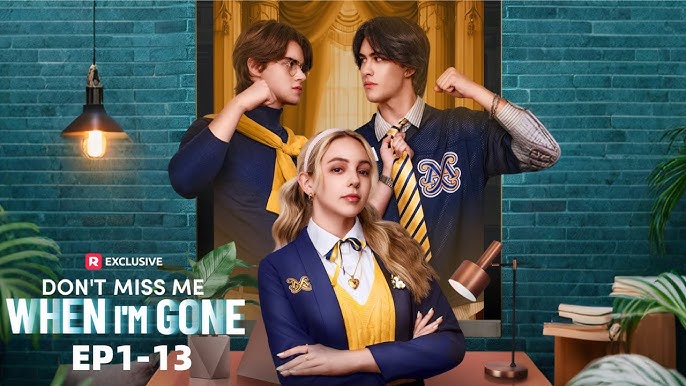
Don’t Miss Me When I’m Gone
Quick take
Daisy lives with stepbrothers Dylon and Caleb and tries to hold a fractured home together. Then Lola arrives and takes everything—her room, her place in the family, and even the boys’ loyalty. Daisy finally chooses herself and prepares to leave for a life back in New York/LA with help from an aunt and an old friend who’s always backed her.
What the series is about
This is a short-episode drama about hitting your lowest point and walking away with your head up. Daisy is not dramatic by nature; she is steady, kind, and a little too patient. That patience is tested to breaking when Lola moves in, performs innocence to the adults, and quietly pushes Daisy out of her own life. The stepbrothers—once protective—drift, then side with the noise. Daisy understands at last: no one is coming to save her.
The turn is simple. Daisy calls Aunt Hailey (var. Ailey in clips) and decides to go home—to the people who actually choose her. In that decision, the show flips from humiliation to self-respect. From here, each micro-episode is a small pivot: packing a bag, setting a boundary, refusing one last guilt trip, and hearing real encouragement from Owen, the boy who has had her back since childhood.
Story walkthrough (specific, spoiler-light)
Episode 1 — the crack
We see the pattern that’s been eating Daisy alive: Lola’s taunts (even claiming Daisy’s clothes and bed), the brothers’ indifference, and a parent who’d rather keep peace than face what’s happening. A call from Daisy—“I want to move back”—tells you the arc has changed.
Early run — choosing to leave
Daisy starts saying no. Not loudly—clearly. She stops explaining herself to people who only want her quiet. Lola escalates with petty social media digs; Daisy stops engaging and focuses on logistics. Aunt Hailey and Owen make the move feel possible, not just emotional.
Mid run — truth vs. performance
The series prefers proof over speeches: screenshots, witnesses, and practical steps (housing, travel, work/school). We see why Daisy’s years in that house drained her—and why leaving is not “running,” it’s recovering. Various promos and fandom notes frame the story with Daisy’s line: “After I leave, they beg me to come back.” The point isn’t revenge; it’s refusing to live where love is conditional.
Late run — the clean exit
The momentum aims at a public, undeniable change: Daisy out the door, plans in hand, and the house forced to sit with the outcome it created. Begging may come later; what matters is Daisy’s forward motion—new city, chosen family, and boundaries that will not be moved again.
Main characters (who they are in this story)
- Daisy (lead) — the person who finally chooses self-respect over proximity. Her power is steady action: calls made, bags packed, door closed. (Name and setup per IMDb logline and platform clips.)
- Lola (antagonist) — a performer who thrives on attention and provocation; she takes Daisy’s space, then narrates Daisy’s life to others.
- Dylon & Caleb (stepbrothers) — once protective, now passive or complicit; their silence hurts as much as Lola’s taunts.
- Aunt Hailey (Ailey) — the adult who actually shows up; her call with Daisy is one of the first breaths of relief in the middle stretch.
- Owen — the long-time friend who has always had Daisy’s back; he becomes part of the solution, not the problem.
(IMDb lists cast such as Patches, Cayla Brady, Christopher Quartuccio, and Luke Dodge for the 2025 mini-series entry.)
How it plays (minute-to-minute feel)
- Micro-episodes (~1–2 minutes) designed for phones.
- Typical beat: put-down → receipt → boundary. Someone crosses a line; a message/clip proves it; Daisy sets a clear limit and moves on.
- Most turns happen in public or semi-public spaces (doorways, hallways, socials), so outcomes stick.
The official app page and compilations show the same rhythm: fast scenes, clear reversals, and a forward-only spine.
Themes (why it connects)
- Self-respect over proximity — staying is not loyalty if it erases you.
- Proof beats performance — receipts cut through manipulative charm.
- Found family — choose the people who choose you back.
These angles are echoed across the official synopsis, app listings, and coverage that pairs the title with the “After I Leave…” framing.
What to expect by the ending (no heavy spoilers)
- A clean exit you can point to: Daisy leaves on her terms, with support.
- A reversal in who chases whom: people who dismissed Daisy start dealing with her absence.
- A start, not a loop: the final tone points to new work/school/home chapters, not a return to the same house with new promises.
This lines up with the app/fandom write-ups linking Daisy’s departure to the “they beg me to come back” idea.
Availability (concise, platform-friendly)
The full series streams in the vertical-drama apps that carry the title (see the official ReelShort page). You’ll also find short samples/compilations on YouTube and Dailymotion that route back to the app.
Quick facts
- Format: vertical short series; ~1–2 minutes per episode
- Year/listing: 2025 mini-series entry on IMDb; episode grid shows S1 placeholders.
- Core arc: erosion at home → decision to leave → proof and boundaries → future with chosen family
what now? (my next stop)
You just walked out with your dignity intact—no last-ditch texts, no crumbs taken. If you want more quick episodes that keep that self-respect energy—tight beats, zero filler—queue these next.
links are affiliate/sponsored.

Keys To My Heart
what it is (one line): a gentle second chance where boundaries are honored, apologies are concrete, and love shows up on schedule.
why it fits this page: leaving isn’t the end; it’s the standard. Keys lives in that new standard—clear check-ins, steady effort, and affection that doesn’t vanish the moment things get hard. When you’re done proving your worth, this feels like home.
Start a quick series
Pulse of Love
what it is (one line): city-tempo mini episodes—flirt → move → tiny reveal. No speeches, no stall.
why it fits this page: post-goodbye, momentum matters. Pulse keeps you moving forward: sharp banter, soft honesty slips, and “one more” buttons that feel like little wins stacked up. Same spark, less emotional jet lag.
Browse Shortical
Billionaire’s Secret Life
what it is (one line): a glossy identity-twist romance where leverage turns into partnership and the reveal lands clean.
why it fits this page: if distance exposed a power gap, this fixes it. They put everything on the table—terms, trust, next steps—and meet in the middle. Perfect when you want equal footing after walking away from less.
Find similar shorts